


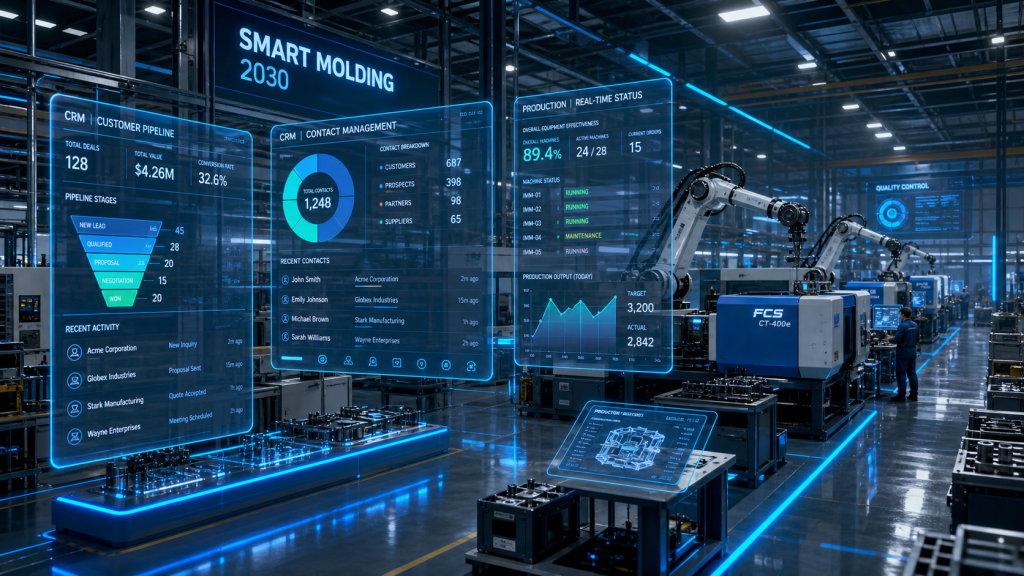
In plastic injection molding, technical capability matters, but so does communication. For companies serving custom molding and mold manufacturing projects, fast follow-up, organized project details, and clear client updates can directly affect trust and repeat business.
Many molding businesses handle a long process before an order is completed. A single project may move from the first inquiry to design discussion, quotation, mold development, sampling, revisions, mass production, and after-sales support, which is why manufacturers often benefit from CRM systems that improve visibility across the full customer journey.
Why spreadsheets stop working
At the beginning, many factories manage leads and customer communication with spreadsheets, email threads, and chat apps. That may work for a small number of projects, but once inquiries increase, it becomes harder to track quote status, follow-up dates, revision requests, and decision-makers across multiple accounts.
A CRM helps centralize those interactions in one place. Instead of searching through inboxes or asking different team members for updates, sales and support teams can view customer history, pending actions, and pipeline stages more clearly.
Where CRM adds value in molding
Plastic injection molding projects usually involve custom specifications, lead times, tooling discussions, and recurring communication with buyers. Manufacturing-focused CRM use cases often include tracking RFQs, managing distributor or client relationships, supporting forecasting, and improving coordination between sales and operations.
For example, a sales manager can log an inquiry from an OEM buyer, attach product requirements, assign follow-up tasks, and record quotation status inside the same system. When the client returns for revisions or a repeat order, the team already has the conversation history, reducing delays and improving consistency.
Better follow-up, better retention
One of the biggest risks in B2B manufacturing is not losing a deal because of product quality, but because follow-up is slow or inconsistent. CRM platforms help companies set reminders, monitor response times, and keep every active lead moving through the pipeline instead of letting promising inquiries go cold.
They also support stronger account management after production starts. When teams can see order notes, past issues, and service requests in one place, they are better prepared to maintain long-term relationships and spot upsell or repeat-order opportunities.
Choosing the right system
Not every manufacturer needs a complex enterprise platform on day one. In many cases, the best starting point is a practical CRM setup that covers contact management, pipeline tracking, task reminders, and a simple view of ongoing accounts.
For teams researching options, guides, comparisons, and platform overviews from resources like TheGreatCRM can be a useful starting point for understanding which CRM approach fits a growing B2B manufacturing workflow.
Final thought
In a competitive market, molding companies need more than production capacity. They also need a reliable way to manage inquiries, nurture customer relationships, and keep projects organized from first contact to final delivery, which is exactly why CRM adoption continues to matter in manufacturing.

